A clear, honest breakdown of what separates our three ceramic tiers, and why the price difference is mostly paint preparation, not the coating bottle.
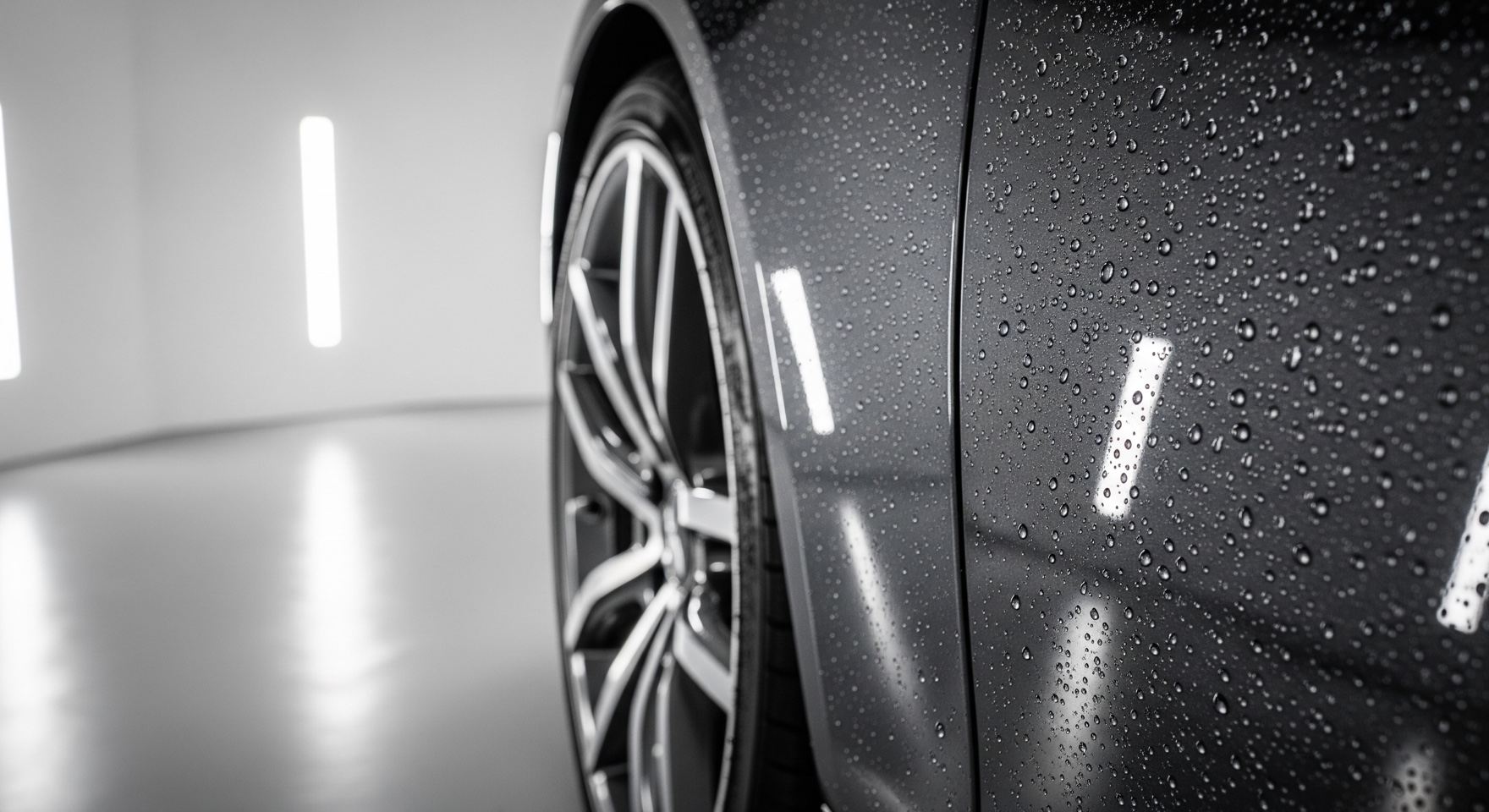
When owners ask us to "just quote a ceramic coating," the honest answer is that the bottle is the small part. A ceramic coating is a micron-thin layer of glass-like chemistry that bonds to your clear coat, adds gloss and a hydrophobic surface that sheds water and dust, and makes washing easier. It is not chip protection, and it will not fill or hide swirl marks. Whatever imperfection is in the paint on the day we seal it, the coating locks in. That single fact is why our packages are priced at €1,000, €1,500 and €2,000, and why the difference between them is mostly the hours of paint correction underneath, not the coating on top.
Our entry tier at €1,000 suits a newer car, a well-kept daily, or a garaged second-home vehicle whose paint is already in good condition. It covers a proper decontamination wash, clay treatment to pull embedded fallout and tar out of the surface, a single-stage machine polish to remove light marring and lift gloss, and then the coating itself, cured and inspected. For a car that has been looked after, this is often all it genuinely needs, and we would rather tell you that than sell you correction hours you cannot see the benefit of.
The €1,500 tier is where most cars in the golden triangle land. Vehicles here live a hard life for their paint: relentless summer UV, the fine abrasive Saharan Calima dust that settles and then gets wiped across the surface, and salt-laden air from the coast. That combination leaves multi-stage swirls, water spotting and dullness that a single polish will not fully resolve. This package adds a two-stage correction, more careful work on edges and panels, and a longer-life coating, so you are not just sealing the paint but genuinely resetting its finish first.
The €2,000 tier is a heavier correction and a longer-durability system, suited to darker or metallic finishes where every flaw shows, to cars carrying years of accumulated defects, or to owners who want the deepest possible reflection and the longest service interval. More of the correction is done by hand and on delicate areas, and coverage typically extends to trim, wheel faces and glass. It is not simply "the expensive one"; it is the right choice when the paint's condition actually demands that level of work. On a car that does not need it, we will say so.
A point we make with every client: none of these tiers is a force field. Ceramic changes how dirt and water behave and how the paint looks, but a stone on the motorway still chips paint, and a careless automatic car wash still inflicts swirls. If your real worry is physical damage to the front of the car, that is a conversation about paint protection film, which is a thick, self-healing layer that genuinely absorbs impacts. Plenty of owners here run both, PPF on the high-impact panels and ceramic over the rest, and we are happy to map out what makes sense for how you actually use the car.
Durability also depends on you, not just on us. A ceramic coating's real-world lifespan is protected by light, regular, correct washing, not by a big number on a receipt. In this climate that matters more than most people expect, because Calima dust and coastal salt sit on a hydrophobic surface and, if dragged around with the wrong sponge, will scratch straight through the gloss you paid for. This is why our aftercare rhythm exists and why we keep coatings honest with periodic check-ups rather than quoting an inflated warranty figure we cannot stand behind.
One firm promise runs through all three tiers: we look at your car in person before we give you a fixed price. Paint condition simply cannot be read from a photo, and a blind quote almost always turns into either an upsell later or corners quietly cut to protect a margin. We would rather spend twenty minutes with the car, show you the defects under proper light, and recommend the tier the paint honestly needs. Sometimes that means steering you down a level, not up. And if you have been offered a "ceramic" for around €399 elsewhere, treat it as a wax with a confident name, because real correction and a genuine coating cannot be done for that.

If this applies to your car, these pages take you straight to the right service.
A plain look at how our offers are structured, why we avoid artificial deadlines, and how to judge whether a promotion is genuinely worth taking.
How a car interior is properly deep-cleaned, protected and, when needed, rebuilt — and where the honest limits of restoration sit.
How a thin protective film and proper headlight restoration protect one of the most expensive-to-replace parts of a modern car.