A plain look at what a full-body paint protection film job at JustCars covers, where the edges are, and why it matters in the Algarve.
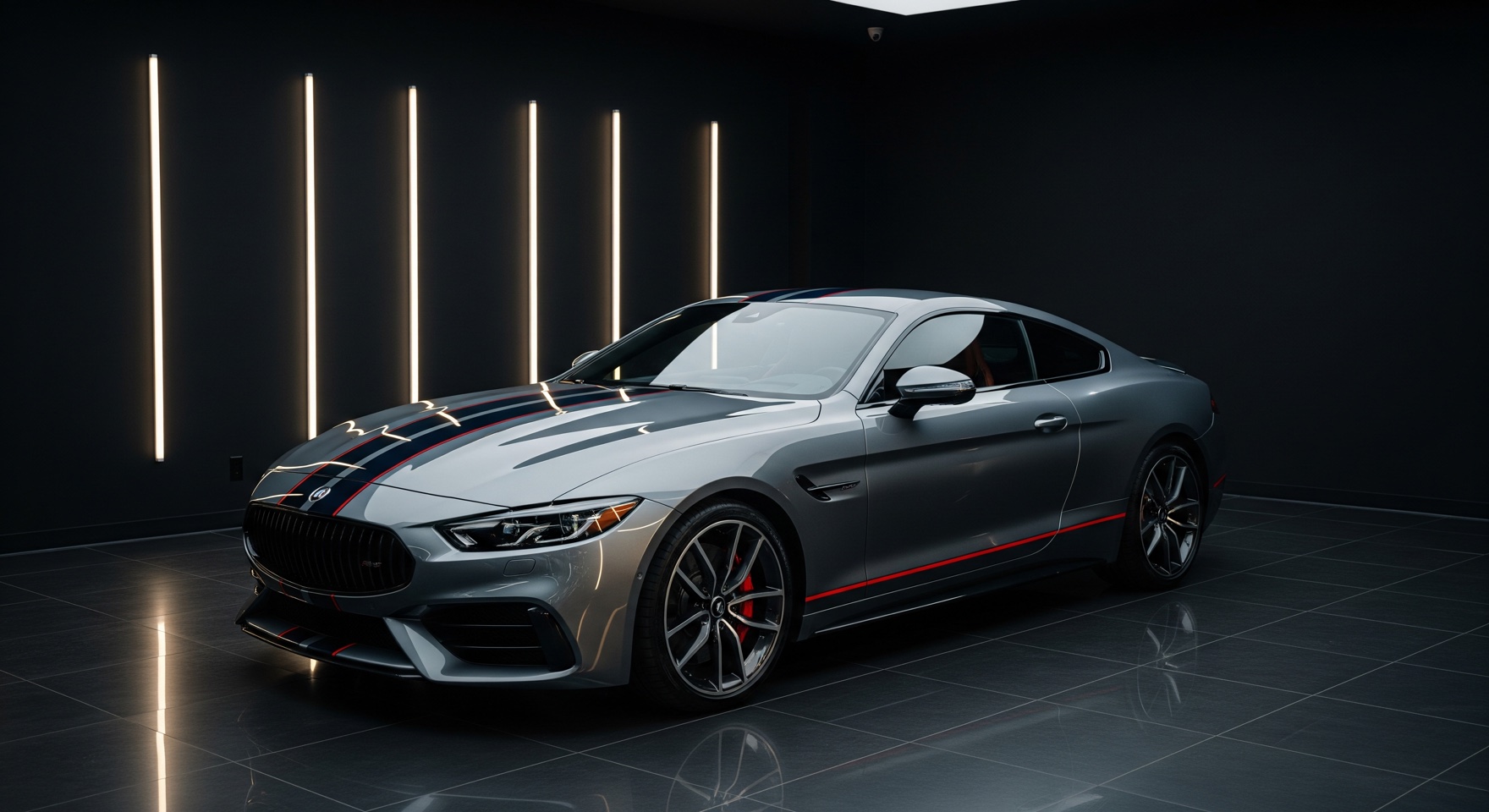
When someone asks for "full-body PPF," they usually picture the whole car wrapped in an invisible shield. That is broadly right, but the value is in the detail: which panels, which edges, and how the film is finished. Paint protection film is a thick, self-healing urethane layer that physically absorbs stone chips and light abrasion. It is not a coating and not a gloss trick. On the film itself you can reasonably expect around seven years of service, kept honest by regular aftercare rather than a headline number.
A genuine full-body job at JustCars covers every painted surface the car presents to the road and the weather: the full bonnet, front bumper, wings, both full doors, mirrors, the roof, rear quarters, boot and rear bumper. It is not a front-end "kit" quietly sold as a whole-car wrap. Where it matters, film is wrapped around and tucked into panel edges rather than cut flush on the visible face, so the leading edge that actually meets flying grit is protected and the join is far less obvious. That wrapped-edge work is slow and is a large part of why a full-body price starts from around six thousand euros, with the lifetime PPF flagship from around ten thousand.
The Algarve is a specific place to protect a car, and that shapes what we recommend. The golden triangle sun is relentless, and UV is what fades and hardens paint over years. Saharan Calima events coat everything in fine, mineral dust that turns an ordinary drive or a careless wipe into thousands of tiny scratches. Coastal salt and sea air sit on the surface between washes. Film takes the brunt of the dust and the road debris on the coast roads, and the finish underneath stays closer to the day it was delivered. For a villa or second-home car that sits for weeks and then does long motorway runs, that trade-off tends to make sense.
It is worth being clear about the limits. PPF stops chips and resists swirls; it is not armour against a kerbed wheel, a deep key gouge or a car-park dent. Self-healing means light marks lift with the sun's warmth or warm water, not that every scratch vanishes. Film has a real thickness, so on very sharp body lines and complex curves there is a visible edge if you look for it up close, and honest installers place those edges where they read least, not nowhere. And film ages: it can gather a faint cast over many years, which is normal wear, not failure.
A common and sensible pairing is film plus ceramic. People sometimes assume they choose one or the other, but they do different jobs. PPF is the physical chip protection; ceramic is a micron-thin gloss and hydrophobic layer applied over the film that makes the surface easier to rinse and helps Calima dust and salt let go with less contact. Ceramic is not chip protection, and a cheap "ceramic" offered for a few hundred euros is usually a wax dressed up as something more. Our ceramic packages sit at one, one-and-a-half and two thousand euros, and many full-body PPF cars have ceramic on top.
The part we will not shortcut is the quote. We inspect the car in person before giving a fixed price, because film usage, existing paint condition and the panels that genuinely need coverage vary from car to car. A number over a photo would be a guess, and a guess helps nobody. In the same inspection we are honest if a car does not need the full body: sometimes high-impact areas plus a ceramic layer is the smarter spend, and we will say so rather than sell the largest package by default.
After installation, the film is kept working by simple, regular aftercare, roughly every three months, which is also what keeps the manufacturer and installation warranties meaningful. As a STEK-certified installer we can offer a ten-year manufacturer warranty on the film plus a one-year installation warranty, but a warranty is a relationship, not a certificate in a drawer. If something is wrong and it is on us, we fix it quickly. That is the actual product: film on the car, and someone who stands behind it long after the day you drive away.

If this applies to your car, these pages take you straight to the right service.
A plain look at how our offers are structured, why we avoid artificial deadlines, and how to judge whether a promotion is genuinely worth taking.
How a car interior is properly deep-cleaned, protected and, when needed, rebuilt — and where the honest limits of restoration sit.
How a thin protective film and proper headlight restoration protect one of the most expensive-to-replace parts of a modern car.