An honest guide to paintless dent removal and headlight restoration, when each works, when it doesn't, and why the Algarve climate matters.
Two of the most common jobs that come through a workshop door are also the two most misunderstood: a dent in a door and a pair of headlights that have gone cloudy. Both look small. Both are worth understanding properly before you spend money, because the right method depends entirely on the specifics of the damage, and the wrong method can cost you more later.
Paintless dent removal, or PDR, is the technique most people have heard of and few have seen done well. A trained technician works the metal back to its original shape from behind the panel, using specialised rods and, sometimes, glue-pull tabs on the outside. When it works, it is close to invisible and it keeps the car's original factory paint completely intact, which matters for value and for corrosion resistance. But PDR has honest limits. It works best on shallow dents where the paint has not cracked or split, on panels the technician can actually reach from behind, and on metal that has not been stretched too far. A sharp crease, a dent over a body line, or any spot where the paint has broken is usually beyond it. In those cases the correct answer is conventional repair and refinishing, which we handle through trusted master painters and stand behind ourselves. Anyone promising PDR on a creased, cracked dent is more likely to leave you with a wavy panel and a story.
There is a reason dents deserve prompt attention here specifically. If paint has cracked over a dent and bare metal is exposed, the coastal salt air along the golden triangle will start working on it. A small chip today can become a rust bloom over a season if it is left open. Sorting the damage sooner, even if the fix is only sealing the exposed metal, is cheaper than sorting it later.
Headlight restoration is the other job people underestimate. Modern headlights are polycarbonate, not glass, and the manufacturer applies a thin UV-protective coating to the outer surface. Under the Algarve sun that coating is exactly what degrades. Once it fails, the plastic underneath oxidises, yellows and hazes, and the practical result is not just cosmetic: a fogged lens scatters light and measurably reduces how far you can see at night. For a second-home owner whose car sits outside a villa through long, bright summers, this happens faster than most expect.
Restoration done properly means wet-sanding the oxidised layer back through progressive grits, polishing the lens clear, and then, crucially, applying a fresh protective coating, ideally a proper UV-resistant sealant rather than just a quick polish. That last step is what separates a lasting result from a temporary one. A lens that is simply sanded and buffed will look brilliant for a few weeks and then haze again quickly, because you have removed the old factory protection and put nothing back. It is an honest trade-off to understand: restoration buys back clarity and can extend a headlight's life for a fair while, but it is not permanent, and a lens that is cracked, has moisture trapped inside, or is internally damaged is a replacement job, not a restoration one.
Both of these services share a principle we apply to everything: we look at the actual car before quoting. A dent's depth, whether the paint is intact, whether the panel is accessible, how far the headlight oxidation has gone, whether there is moisture inside the unit, none of that is reliably judgeable from a phone photo. That is why we inspect in person and give a fixed price for the specific job, rather than a blind number that changes when the car arrives.
The honest summary is this. PDR and headlight restoration are excellent value when the damage suits them, preserving original paint and avoiding a full lamp replacement that can run into serious money on a modern car. They are the wrong choice when the damage has gone past what they can address, and a good workshop will tell you which situation you are in rather than selling you the service you walked in asking for. If you are in Vale do Lobo, Quinta do Lago, Vilamoura or Almancil and unsure which side of that line your car falls on, the sensible first step is a proper look, not a guess.
If this applies to your car, these pages take you straight to the right service.
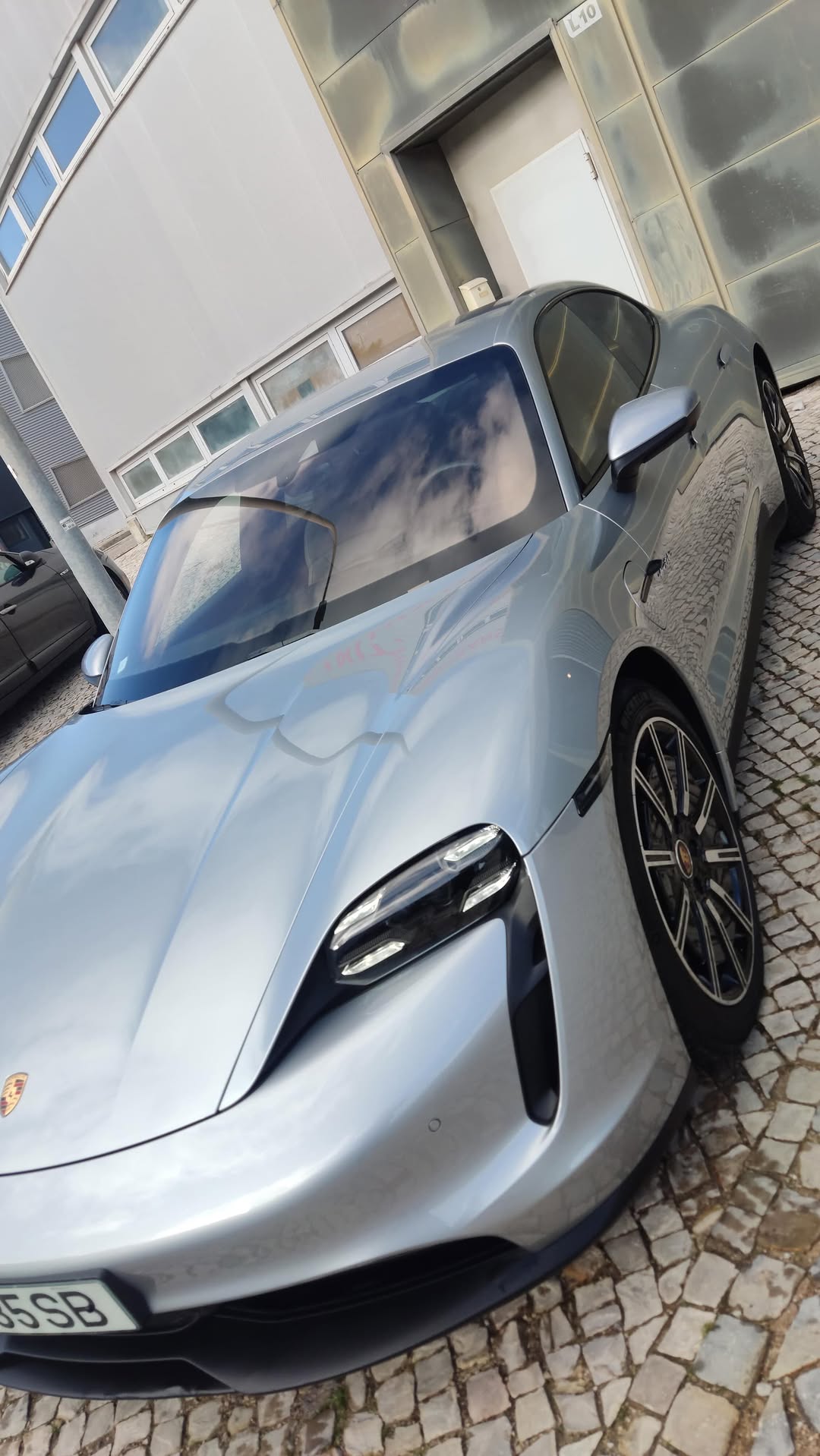
Porsche Taycan — restoration at the JustCars studio in Almancil.
Mercedes-Benz BRABUS — restoration at the JustCars studio in Almancil.
Mercedes-Benz — restoration at the JustCars studio in Almancil.